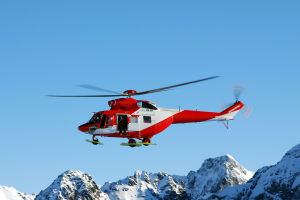
Have you ever watched a helicopter stay almost motionless in the air or rise straight upward without any runway? It feels almost magical at first glance.
Today, we will explore this idea in a simple and clear way. We will look at how lift is created, how movement is controlled, and why this aircraft is so flexible in real-world use.
How Upward Force Is Generated
The key idea behind flight is lift. A helicopter creates lift using spinning blades mounted on top. As these blades rotate, they push air downward. In response, the air pushes the aircraft upward.
Each blade is shaped in a special way so that air flows faster over the upper surface and slower underneath. This difference in air pressure creates upward force. By changing how fast the blades spin, the lift can increase or decrease smoothly, allowing controlled ascent, descent, or hovering in one position.
Moving in Any Direction with Precision
Unlike many aircraft that rely on forward speed, this type of flying machine can move in multiple directions even while staying in the air.
The secret lies in adjusting the angle of the rotating blades. When the angle changes, the direction of lift shifts slightly. This allows the body to tilt gently, creating forward, backward, or side movement.
This ability makes it useful in areas where space is limited or where precise positioning is needed.
Keeping Balance During Rotation
When the top blades spin, they naturally create a twisting force on the body. Without control, the body would rotate in the opposite direction.
To solve this, a smaller rotating system is placed at the rear. It produces a balancing force that keeps the structure steady. At the same time, it also helps guide direction, making smooth turning possible even during hover.
Main Systems Working Together
A helicopter is made of several important parts that function as one system.
- The main frame supports the structure and carries all other components. It is designed to be strong but light, using modern materials that improve efficiency.
- The rotating blade system is the most important part. It includes the main blades and the rear balancing unit. These components control lift and stability.
- The power unit provides energy for rotation. Depending on design and purpose, different engine types may be used to keep the system running smoothly.
- Modern control systems help adjust blade angle and power output automatically. Some designs also include automated flight assistance, improving stability during complex conditions.
Real-World Uses in Daily Life
This type of aircraft is widely used because it can reach places that are difficult for other transport systems.
- In urgent response situations, it can reach remote or crowded areas quickly and transport people who need immediate attention. This speed can make a big difference when timing matters.
- In fire-related operations, it supports control efforts by delivering water and observing large zones from above. Its ability to stay in one position helps coordinate ground teams.
- In public monitoring roles, it is used to observe traffic flow, environmental changes, and large outdoor gatherings. The hovering ability makes it ideal for steady observation.
- In travel services, it provides fast point-to-point movement between locations. Scenic flights also allow people to enjoy wide views from above in a short time, offering a unique experience.
Looking Ahead to New Developments
Technology continues to improve how these aircraft are designed. Engineers are focusing on making them quieter, more energy-efficient, and easier to control.
Electric-powered versions are being developed, along with remote-operated models that reduce the need for onboard piloting. These innovations may open new possibilities for use in urban environments and specialized tasks.
As materials and control systems continue to improve, future designs are expected to be more efficient and adaptable to different environments.
Final Thoughts
What seems like a simple hovering aircraft is actually a carefully balanced system of physics, engineering, and control. From lift generation to precise movement in any direction, every part works together in harmony.
Next time we see one in the sky, we can appreciate how much design and science are involved in keeping it steady and flexible in the air.