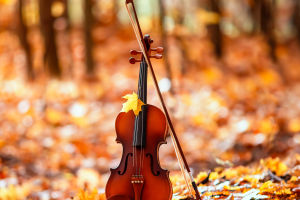
The violin is a timeless instrument that has graced concert halls for centuries with its soaring melodies and emotional depth.
Whether it's the delicate strains of a classical piece or the raw energy of a rock performance, the violin has a unique ability to stir the soul.
But beyond its elegance, the violin has a rich history and a set of intriguing facts that many may not know. Let's dive into some of the most fascinating facts about this instrument that continues to captivate musicians and audiences alike.
The Origins of the Violin
The violin, as we know it today, traces its origins back to 16th-century Italy. It was crafted from the fusion of earlier stringed instruments like the rebec and the lira da braccio. The first violin makers were artisans in Cremona, Italy, with Antonio Stradivari and Giuseppe Guarneri standing out as the most famous. Stradivari's violins, in particular, are revered worldwide and are considered some of the finest ever made.
Violin-making became a true art form in Cremona, with the town becoming synonymous with master craftsmanship. Today, Stradivari's violins are not only considered invaluable due to their sound quality but also because of their incredible rarity—some of his violins are worth millions of dollars.
Violin Construction: A Delicate Balance
Creating a violin is a highly specialized and intricate process. The craftsmanship behind a violin requires a delicate balance of wood selection, shaping, and varnishing.
1. Wood Choices
The body of the violin is typically made of spruce for the top and maple for the back, sides, and neck. This combination creates the instrument's unique resonance and rich tone. The wood must be aged for years before it can be used, and the violin maker must carefully select each piece for its grain, texture, and sound properties.
2. String Tension and Sound
The strings of a violin are under intense tension, with each string holding around 40 pounds of pressure. This tension is critical to the instrument's ability to produce sound. When the bow is drawn across the strings, the friction creates vibrations that resonate through the body of the violin, producing its iconic sound.
Violin and Music: The Emotional Connection
One of the most captivating aspects of the violin is its ability to evoke deep emotions. The violin's range is incredibly versatile, capable of producing both the softest, most haunting sounds and the loudest, most intense tones. This emotional power is what makes the violin such an essential instrument in orchestras, chamber music, and even modern genres like rock and jazz.
1. The Violin's Range
The violin has a four-string range, typically tuned in perfect fifths (G, D, A, and E). These strings allow the violin to cover a wide range of notes, from deep, resonant tones to high-pitched, piercing sounds. Some skilled violinists can even play beyond the violin's natural range, using techniques like harmonics to produce otherworldly sounds.
2. Expressing Emotion
Because of its expressive nature, the violin is often referred to as the instrument most capable of imitating the human voice. Whether it's the sorrow of a slow movement or the joy of an allegro, the violin can communicate emotions with remarkable precision. Many famous composers, such as Beethoven, Brahms, and Tchaikovsky, wrote violin concertos that are now some of the most beloved pieces in classical music.
The Influence of Stradivarius Violins
The name “Stradivarius” has become synonymous with violin perfection. These instruments, crafted by Antonio Stradivari, are considered the pinnacle of violin craftsmanship.
1. Unmatched Sound Quality
Stradivari's violins are famous for their unparalleled sound quality, which is often described as rich, powerful, and sweet. Despite centuries of research and attempts to replicate the sound, no modern violin has quite matched the resonance and tonal richness of a Stradivarius.
2. The Stradivarius Mystery
The secret to Stradivari's incredible violins has long been the subject of fascination. While some have speculated that it was the specific wood he used or the varnish he applied, the true reasons for the unique sound of Stradivarius violins remain somewhat of a mystery. However, one theory is that Stradivari's attention to minute details in both design and construction created the ideal balance for sound production, something modern violin makers have yet to fully replicate.
Violinists: Masters of Technique
The art of playing the violin is no simple task. It requires an immense amount of skill, practice, and precision. The violin is notoriously difficult to learn, especially because it lacks frets to guide finger placement, making intonation (the accuracy of pitch) a constant challenge.
1. The Bowing Technique
The bow, typically made of horsehair and wood, plays a crucial role in producing the violin's sound. A violinist must master the delicate balance of bowing, applying just the right amount of pressure to the strings while moving the bow smoothly across them. The ability to control the bow allows violinists to achieve a wide variety of effects, from smooth legato passages to sharp, staccato notes.
2. Finger Positioning
Without the guidance of frets, violinists must rely on muscle memory and a finely tuned ear to ensure they are playing in tune. The left hand must be precise in its finger placement on the fingerboard, as even the slightest variation can lead to off-pitch notes.
Conclusion: The Violin's Timeless Legacy
The violin has stood the test of time as one of the most revered instruments in the world. Its captivating sound, intricate design, and ability to express the deepest emotions make it a true masterpiece of musical craftsmanship. Whether it's being played in a grand concert hall or as a personal expression in a small room, the violin's influence on music is undeniable.
Reflecting on the violin's history and its role in music, it's clear that this instrument represents not just technical skill, but an emotional connection between the performer and the listener. Its timeless beauty reminds us that music, in all its forms, is a universal language capable of transcending time and space, touching hearts in ways that words alone cannot.