On a quiet evening, when we lift our eyes toward the sky, the vast darkness above often feels strangely empty. The twinkling constellations we once admired as children seem to have vanished.
Where there used to be a sea of stars, now only a few lonely dots flicker faintly through the city’s glow. It’s easy to wonder—have the stars truly faded away, or have we simply lost sight of them?
The truth is, the stars haven’t disappeared at all. They still shine as brightly as ever, scattered across the universe. What has changed is our ability to see them, and the reason lies in something entirely of our own making—light pollution.
What Is Light Pollution?
Light pollution occurs when artificial lights brighten the night sky and overpower natural starlight. Streetlights, advertising signs, car headlights, and brightly lit buildings all release light that spreads into the atmosphere. Instead of staying focused where it’s needed, this light bounces off air particles and clouds, forming a bright glow that hides the stars.
Think of it like this: when you try to see a candle flame under the midday sun, it’s almost impossible. The light from the candle hasn’t changed—but the background is simply too bright. That’s exactly what happens in cities every night.
How Our Eyes Adapt to Darkness
Our eyes are designed to function in both light and dark conditions. They rely on two types of cells: cone cells, which work best in bright light and help us see color and detail, and rod cells, which are much more sensitive to dim light but cannot detect color.
When we move from a bright place into darkness, our eyes begin a process called dark adaptation. The pupils widen to let in more light, the cone cells rest, and the rod cells gradually take over. This transformation takes 20 to 30 minutes, allowing us to see faint shapes and stars that would otherwise be invisible.
However, in modern cities, we rarely give our eyes that chance.
Why City Lights Keep Us from Seeing the Stars
Every time we glance at a phone screen, pass a streetlight, or face a car’s headlights, our eyes reset. That brief flash of brightness forces them to start the dark adaptation process all over again. As a result, our eyes never fully adjust to the dark, and the stars—already faint to begin with—disappear from sight.
So it’s not just the city’s light that hides the stars. It’s also the way light pollution disrupts our natural night vision. The constant glow keeps our eyes in “day mode,” making the sky appear much emptier than it really is.
Technology and the Growing Glow
As cities expand and technology advances, the amount of artificial light grows dramatically. We light up buildings, streets, bridges, and parks for beauty and safety—but all that light comes at a cost. The collective glow of thousands of lamps and screens rises into the atmosphere, creating what astronomers call “skyglow.”
Even small towns can now produce enough skyglow to be seen for miles. The result is that truly dark skies—where we can see the Milky Way stretching across the horizon—have become incredibly rare.
Can We Still Find the Stars?
Yes, absolutely. The stars haven’t gone anywhere—they’re still shining as they always have. We just need to go where light pollution is minimal. Remote deserts, high mountains, and national parks often offer the clearest, darkest skies.
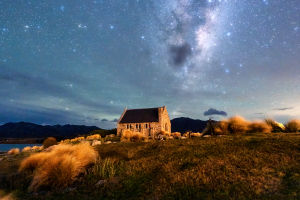
In these places, if we turn off our lights and give our eyes time to adjust, the night transforms. The Milky Way becomes visible again, glowing like a river of light. It’s a humbling reminder that the stars are still there, waiting for us to look up.
Let’s Look Up Again
So, Lykkers, when was the last time you truly saw the stars? Maybe it’s time we take a short trip away from the city lights, put away our phones, and let our eyes rediscover the night.
The stars haven’t vanished—they’ve just been hidden behind our own glow. The next time you find yourself under a dark sky, look up and take a moment. The universe hasn’t changed. It’s still there, quietly shining, waiting for us to notice again.
Why Can't We See The Stars Anymore?
Video by Explified Labs